Seeds
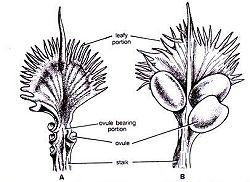
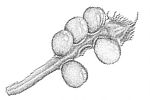
The seeds are collected, cleaned and stored in a brown paper bag at 10-15°C for six months or more, to allow the embryo to fully develop. The seeds are cleaned to ensure that all the flesh is removed, since it may contain germination inhibitors and can also promote the growth of fungi. The flesh is scraped away with a knife but protective gloves should be worn during the cleaning operation to prevent contact with the slow-acting poisons present in the flesh. If the flesh is hard and dry, it helps to soak the seeds in water for a day or two before cleaning. Even if the seeds have been cleaned, it is a good idea to soak them for a few days, preferably with daily changes of water, before planting them. When the seeds are placed in water, the viable ones will sink and the non-viable ones will float.
To germinate the seeds, place the cleaned seeds on their sides half buried on washed sand or potting mix, and keep at about 28°C. It is necessary to keep the medium moist, but not too wet, for as long as it takes for germination to take place.
Seedlings
As soon as the radicals of the sprouted kernels are 10-20 mm long, they can be planted singly in bags containing potting soil or some other suitable medium. Alternatively one can wait until the seedlings develop one or two leaves before transplanting them individually into bags.
Because cycad seedlings form long taproots, it is advisable to use tall narrow perforated black plastic bags about 240X120 mm in size for their initial establishment. Place the seedlings under shade for the first few years of growth and development. Initially the seedlings must be watered daily with a fine spray. After about a month, as their roots elongate, the frequency of watering should be decreased to once a week. The seedlings can be transplanted into the garden when they are 3-5 years old.
 Suckers
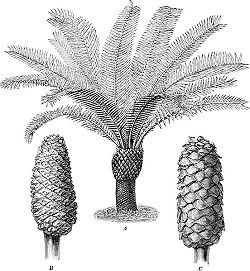
When preparing to propagate from suckers, a hole should be dug around the stem of the mother plant to expose the base and roots of the suckers. One must use a clean sharp knife or sharp spade to remove the sucker from the mother plant. The wound should then be treated with a fungicide and dried for about a week before planting the sucker into a sterile medium.
Pests
Troublesome pests include scale insects, beetles and chewing insects. Scale insects cause great damage to cycad leaves by sucking the sap from them. Most scale insects can be controlled with regular and frequent applications of horticultural soluble oil such as white oil. Beetles seriously damage cycad plants by attacking the emerging young leaves. Control can be kept by application of contact or systemic insecticides, or one of the bacterial preparations available.